GreeceItineraries · Greece
7 Days in Greece: Athens, Mykonos and Santorini by Ferry
This 7 days in Greece itinerary links Athens, Mykonos and Santorini by ferry, with 2026 times, prices and a slower one-island alternative.
This guide may contain affiliate links. We may earn a commission at no extra cost to you. How this works.

In this guide
Seven days gives you Athens plus two Cycladic islands, but only just. The split that works is two days in Athens, two on Mykonos with a morning on Delos, and two on Santorini, with the seventh day for the journey back to Athens. You travel by ferry throughout, and each crossing eats half a day, so early starts and pre-booked boats carry the whole plan. Our Greece hub covers the country in more depth once you fix the shape of the week.
How should you split 7 days across Athens, Mykonos and Santorini?
Two nights in each place is the minimum that still feels like a holiday rather than a transfer. One night per island means you unpack, sleep and leave, which wastes the exact hours the ferries already take from you.
| Days | Where | What the day holds |
|---|---|---|
| 1 to 2 | Athens | Plaka lanes, the Acropolis, the museum |
| 3 to 4 | Mykonos | Town, windmills, Little Venice, Delos |
| 5 to 6 | Santorini | Oia sunset, Fira to Oia walk, Akrotiri |
| 7 | Return | Ferry or flight back to Athens |
This order runs south with the ferry network: Piraeus to Mykonos, Mykonos down to Santorini, Santorini back to Piraeus. It also matches most tour packages, including the standard 7 day Athens, Mykonos and Santorini route (example 7 day package), which follows the same three stops. If your flight home departs from Santorini, skip the return leg and fly straight out. Browse our other Greece itineraries if you have more than a week.
Days 1 to 2: how do you start in Athens?
Spend day 1 on foot in the old centre. Plaka and Anafiotika sit directly under the rock, all whitewashed steps and cats, and Monastiraki square stays lively into the evening with souvlaki counters and the flea market streets behind it. This costs nothing and absorbs jet lag better than a museum queue.
Day 2 belongs to the Acropolis. The official adult ticket costs 30 euros (about $32/£26) in 2026, with a reduced 15 euro ticket for eligible visitors, and entry runs on timed slots (current prices). Book the earliest slot on the official platform and arrive before it. By 10am in summer the tour groups stack up at the Propylaea gate and the marble reflects real heat.
Cross to the Acropolis Museum in the middle of the day. General admission is 20 euros (about $22/£17), reduced 10 euros, per the official visitor page. The top-floor Parthenon gallery lines up with the rock itself, and the air conditioning counts as a sight in August.

The Acropolis from Philopappos Hill, with the Odeon of Herodes Atticus below the rock.
The catch with Athens in summer is heat plus crowds plus pickpockets on the metro line to Piraeus. Carry water, wear a hat, and keep your bag zipped on the crowded trains. Timed Acropolis slots sell out days ahead in peak season, so this is the one booking to fix before you fly.
Days 3 to 4: what do you do with two days on Mykonos?
Take a morning ferry from Piraeus on day 3. High-speed boats reach Mykonos in 2 hours 40 minutes to 2 hours 55 minutes. Conventional ships take 4 hours to 5 hours 50 minutes, with fares from about 43 euros (about $46/£37) on either type (Ferryhopper 2026 timetables). Rafina port on the east coast offers even faster 1 hour 50 minute crossings in summer if you stay near the airport, but Piraeus suits a city-centre start. Book seats a few days ahead in July and August; foot-passenger space goes first on the popular morning boats.
Mykonos Town repays slow wandering. The Kato Mili windmills stand above the harbour in a row, Little Venice packs bars onto balconies above the water, and the lanes behind Matoyianni Street hide chapels and bougainvillea between the shops. Swim in the afternoon, for example at Psarou or Ornos, both a short bus or boat ride from Town.

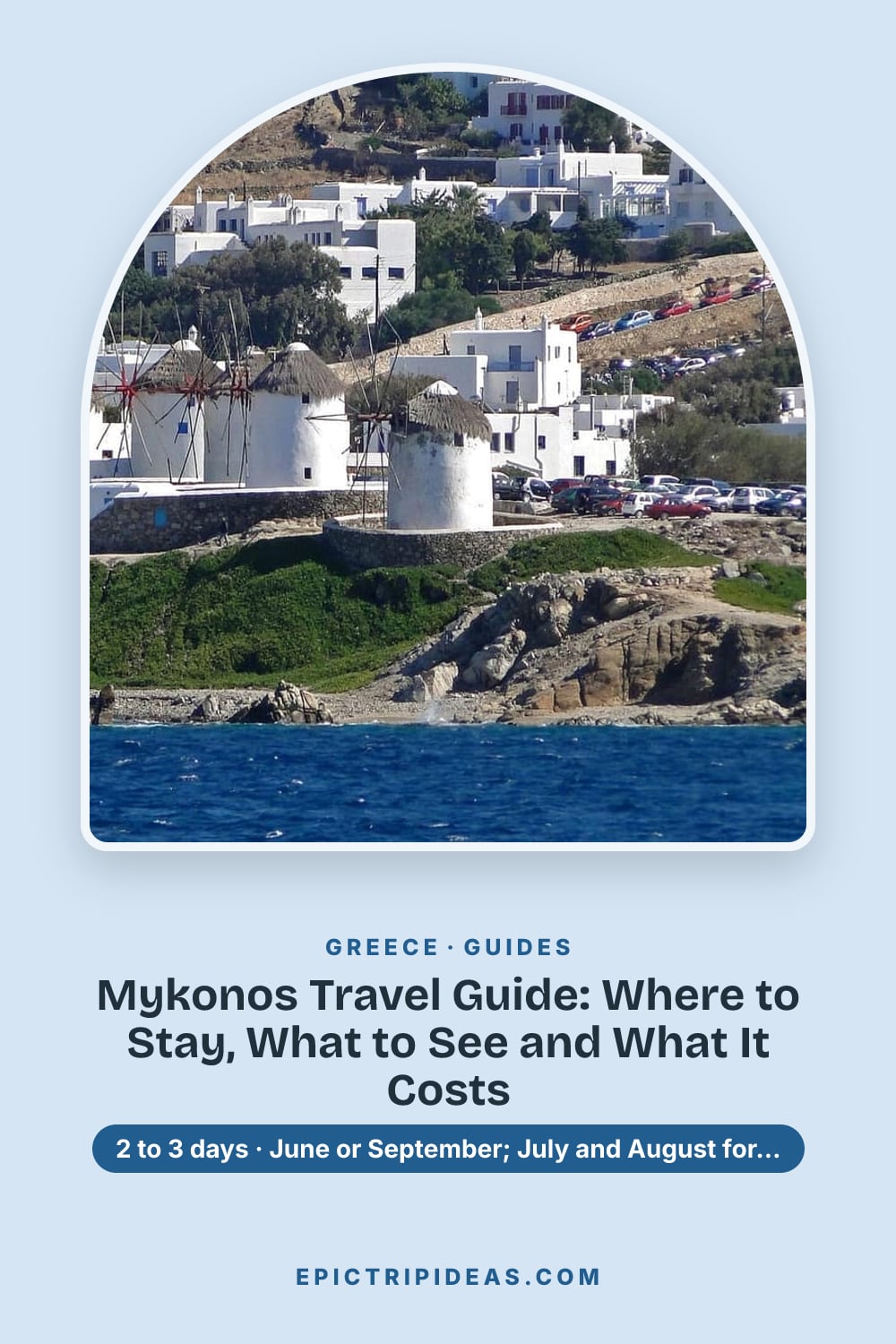
The Kato Mili windmills above Mykonos Town, best photographed in morning light.
Day 4 belongs to Delos. Delos is the small, uninhabited island the ancient Greeks called the birthplace of Apollo, and its ruins rank among the most important archaeological sites in the country. The crossing from the old port takes 30 to 40 minutes. Site entry costs 20 euros (about $22/£17) for adults and the return boat about 25 euros (about $27/£21), so the do-it-yourself total is 45 euros (2026 cost breakdown). Go on the first boat. Delos opens at 8am in summer and there is almost no shade among the ruins, so water, trainers and a hat decide if you love the birthplace of Apollo or merely survive it. Two to three hours on the island is enough, which leaves your afternoon free for a beach and a second evening in Town.
Mykonos is the priciest stop of the three. Rooms, sunbeds and dinners run well above Athens levels from June into September, and the Town lanes clog after 9pm in August. Travellers who want quiet nights should sleep a bus ride out of Town rather than above a bar street.
Days 5 to 6: how do you handle Santorini in two days?
The Mykonos to Santorini ferry takes 2 hours 10 minutes to about 3 hours 30 minutes depending on vessel and stops, with up to eight daily crossings in summer. Standard seats start from around 50 euros, though typical summer fares run 90 to 110 euros (about $97 to $119/£77 to £94), and business class starts near 150 euros (2026 ferry guide). Ferries leave from Mykonos New Port in Tourlos and arrive at Athinios below the caldera cliffs. Arrange your transfer up to Fira or Oia before travel day. Taxis at Athinios are scarce when three boats land together, and the public bus from Fira fills fast.
Head for Oia on your first evening. The sunset crowds are real, with the castle ruins packed an hour before the sun drops. Claim a spot on the western walls early, or book a restaurant terrace and sit the whole thing out in comfort. Either way you see why the village photographs the way it does.

The cable car line and the Old Port below Fira, seen from a boat on the caldera.
Day 6 starts with the cliff walk from Fira to Oia. Leave before 8am in summer with proper shoes, since the path is exposed and the middle section has no shops. The reward is the caldera opening up turn by turn, with Skaros Rock and Imerovigli along the way. Spend the afternoon at Akrotiri, the buried Minoan town under its protective roof, or on a catamaran trip into the caldera with a swim stop. Our Greek food pages cover where Assyrtiko wine and tomato fritters fit into the day: Santo Wines above the caldera pours tasting flights with the drop behind you.
Santorini punishes late planning. Caldera-view rooms in Oia and Imerovigli sell out months ahead for June to September, and prices double against inland villages such as Pyrgos or Karterados. Staying 15 minutes back from the rim cuts the bill without cutting the views, since you walk the rim by day anyway.
Find experiences for your Greece trip
If you book through these links, we may earn a commission at no extra cost to you.Day 7: how do you get back to Athens?
The Santorini to Piraeus run takes 5 hours 25 minutes on the fastest boats and up to 12 hours on slow conventional ships calling at several islands. Fares start from about 58 euros (about $63/£49) conventional and 68 euros (about $73/£58) high-speed (September 2026 fares). A morning sailing puts you in Athens by late afternoon, which suits an evening flight home. Flights from Santorini to Athens also run through the day in season; compare the total door-to-door time against the ferry before you choose.
The one rule for day 7 is slack. Summer ferries slip with the meltemi, and a delayed boat plus a tight international connection is how holidays end badly. If your flight home leaves before noon, sleep your last night in Athens near the metro line to the airport rather than gambling on a dawn sailing from the islands.
Which ferry should you book: fast or slow?
High-speed boats save hours but cost more, ride rougher in wind and keep you inside. Conventional ships are cheaper per mile, steadier, and let you stand on deck with a coffee. The table below compares the three legs of this trip.
| Leg | High-speed | Conventional |
|---|---|---|
| Piraeus to Mykonos | 2h40 to 2h55, from about 43 euros | 4h to 5h50, similar starting fares |
| Mykonos to Santorini | 2h10 to 3h30, often 90 to 110 euros in summer | No conventional option in season; all boats are fast |
| Santorini to Piraeus | From 5h25, from about 68 euros | 6h to 12h with island stops, from about 58 euros |
In July and August, pick the largest vessel at a convenient time rather than the quickest small catamaran. The meltemi is the dry north wind that funnels through the Cyclades in summer, strongest in those two months, and big high-speed ships handle its chop better than small ones. Bring the booking reference on your phone, arrive 30 minutes early, and sit mid-ship if you feel queasy. More practical detail sits in our Greece tips.
What does this trip cost in 2026?
The three main ferry legs come to roughly 200 euros (about $216/£170) per person in summer at standard fares. The headline sights add about 95 euros (about $103/£81): Acropolis 30, museum 20, Delos entry plus boat 45. Everything else flexes with your taste and month.
| Item | Rough cost per person | Notes |
|---|---|---|
| Ferries, 3 legs | About 200 euros | Summer standard seats; shoulder season cheaper |
| Sights | About 95 euros | Acropolis, museum, Delos |
| Rooms, 6 nights | Widest range | Mykonos and caldera views cost most; book months ahead |
| Food and drink | Flexible | Bakeries and tavernas cheap; Town and Oia dinners dear |
A mid-range week lands near 150 euros (about $162/£128) per person per day in season, rooms included. Spring and autumn travellers often pay a third less for equivalent rooms. See our Greece budget guide for a full cost breakdown.
Would one island suit you better?
Three stops in seven days means packing every other day. If that sounds tiring, drop Mykonos and give the week to Athens plus Naxos. Naxos pairs long sandy beaches with mountain villages and some of the best cooking in the Cyclades, at prices well below its famous neighbours. The Santorini to Naxos ferry takes 1 hour 30 minutes to 2 hours 15 minutes, so you can still spend a night or a day trip on the caldera if curiosity wins (island-hopping notes).
The slow version runs: two days in Athens, the ferry to Naxos, four full days on one beach-and-village rhythm, then back to Athens. You lose the Mykonos nightlife and the Oia sunset from your bedroom, and you gain afternoons with nothing scheduled. Families and beach-first travellers usually prefer this shape. Couples chasing the classic views should keep the three-stop plan. Either way, our full set of itineraries has longer Greek routes when a week is not enough.
When should you go?
May to June and September to early October give you the best balance: warm seas, full ferry timetables and rooms that have not hit peak prices. July is excellent but busy. August brings the biggest crowds, the highest prices and the strongest meltemi winds, which can delay small fast ferries.
Winter changes the trip completely. Direct ferries between Mykonos and Santorini stop around the end of October, island to island connections shrink to a few weekly sailings, and many beach hotels and restaurants close. Athens works all year, but this particular week belongs to the long season. Our Europe overview helps if you are weighing Greece against another September destination.
Athens plus Mykonos plus Santorini is popular for a reason: ruins, nightlife and the caldera in a single week with no flights between stops. Book the Acropolis slot and the three ferries early, sleep away from the two most photographed streets, and leave day 7 loose. The islands do the rest.
Day-by-day itinerary
-
Day 1: Athens: arrive, then walk Plaka and Monastiraki
Land, drop your bags and spend the afternoon on foot in the old centre below the rock.
- Plaka
- Roman Agora
- Monastiraki
Overnight: Athens
-
Day 2: Athens: the Acropolis and the museum
Book the earliest Acropolis slot, then cross to the museum in the hot middle of the day.
- Acropolis
- Acropolis Museum
- Anafiotika
Overnight: Athens
-
Day 3: Ferry to Mykonos and an evening in Town
Take a morning high-speed sailing from Piraeus and spend sunset around Little Venice.
- Piraeus port
- Mykonos Town
- Little Venice
Overnight: Mykonos
-
Day 4: Delos in the morning, the island after
Catch the first boat to Delos for the ruins, then swim and wander back on Mykonos.
- Delos
- Mykonos Town
- Kato Mili windmills
Overnight: Mykonos
-
Day 5: Ferry to Santorini and sunset in Oia
Cross to Athinios in the middle of the day and head straight for Oia by evening.
- Mykonos New Port
- Athinios
- Oia
Overnight: Santorini
-
Day 6: Santorini: the caldera walk and Akrotiri
Walk Fira to Oia before the heat, then see Akrotiri or take a boat trip in the afternoon.
- Fira
- Oia
- Akrotiri
Overnight: Santorini
-
Day 7: Back to Athens and home
Ferry or fly back to Athens, with a buffer night before a morning flight home.
- Athinios
- Piraeus
- Athens Airport
Overnight: Athens (or home)
Know before you go
Greece at a glance
Best time to visit
May to June, September to October
- January: cool, some showers
- February: cool, some showers
- March: mild, some showers
- April: mild, mostly dry
- May: warm, some showers
- June: hot, some showers
- July: hot, mostly dry
- August: hot, mostly dry
- September: warm, some showers
- October: warm, mostly dry
- November: mild, some showers
- December: mild, some showers
Mostly dry Some showers
- Capital
- Athens
- Currency
- Euro (EUR)
- Language
- Greek
- Time zone
- EET, UTC+2
- Plugs
- Type C / F, 230 V
- Driving
- On the right
Emergency112
Frequently asked questions
Is 7 days enough for Greece?
Yes for Athens plus two islands, if you accept three half-days of travel. Two days in Athens, two on Mykonos with Delos, and two on Santorini is the standard split. You will not have time for Crete, the Peloponnese or a third island as well.
Should you travel Athens to Mykonos to Santorini in that order?
This order works well because the Mykonos to Santorini ferry runs south through the Cyclades in 2 hours 10 minutes to about 3 hours 30 minutes. If your flight home leaves from Santorini you save the trip back to Athens. Note the direct island to island ferries run roughly March to November, so winter trips need a different plan.
How rough are the Greek ferries?
High-speed catamarans are comfortable in calm seas but feel the meltemi wind, strongest in July and August. If you cross in August, pick the largest vessel at a convenient time rather than the fastest small boat, and keep seasickness tablets in your day pack.
How much does 7 days in Greece cost?
Ferries for the three main legs come to roughly 200 euros per person in summer, and the main sights add about 95 euros (Acropolis 30, museum 20, Delos entry plus boat 45). Rooms dominate the rest: Mykonos and Santorini cost far more than Athens in July and August, so spring and autumn travellers pay much less for the same week.
Is the slower one-island version better?
If you dislike packing every other day, yes. Two days in Athens plus five on Naxos, with Santorini reachable by a 1 hour 30 minute to 2 hour 15 minute ferry if you want a taste, gives you beaches, villages and lower prices with a single base.
Useful links (6)
- Piraeus to Mykonos ferries 2026, Ferryhopper— ferryhopper.com
- Piraeus to Santorini ferries 2026, Ferryhopper— ferryhopper.com
- Mykonos to Santorini ferry guide 2026, Santorini Dave— santorinidave.com
- Acropolis ticket prices 2026— tickets-acropolis.org
- Acropolis Museum plan your visit, official site— theacropolismuseum.gr
- Delos tour prices and ferry times 2026, Mykonos Tours— mykonos.tours
Photo credits
Thank you to Pedro Szekely, A.Savin, Julian Lupyan and Norbert Nagel for sharing these beautiful photographs and helping bring this guide to life.

Editorial byline
Emma Collins Croatia, Greece and Turkey editor
Emma covers Croatia, Greece and Turkey for Epic Trip Ideas: city breaks, island hops, ferry routes, where to eat and what a trip really costs. Emma Collins is a pen name the Epic Trip Ideas editors use for Croatia, Greece and Turkey; every guide is checked against official sources before it goes live.