Chiang Mai Travel Guide: Where to Stay, What to See and How to Get Around
Plan a trip to Chiang Mai: the best areas to stay, Doi Suthep and the Old City temples, night markets, khao soi, day trips and real costs for 2026.

In this guide
Chiang Mai is Thailand’s most rewarding city for a slower trip: more than 300 temples, a walled Old City you can cross on foot in twenty minutes, cooler evenings than Bangkok and some of the best food in the country for very little money. This guide covers where to stay, what is worth your time, how to get around and what things cost.
Chiang Mai at a glance
Chiang Mai sits in a valley in northern Thailand, about 700 km north of Bangkok. The heart of the city is the square Old City, ringed by a moat and the remains of a brick wall, with Tha Phae Gate on its eastern side. West of the Old City, the Nimmanhaemin area (Nimman for short) is the modern district of cafes, malls and co-working spaces. East, toward the Ping River, are the Night Bazaar and quieter riverside hotels.
The mountain Doi Suthep rises directly west of the city, and on a clear day you can see its temple from the moat.
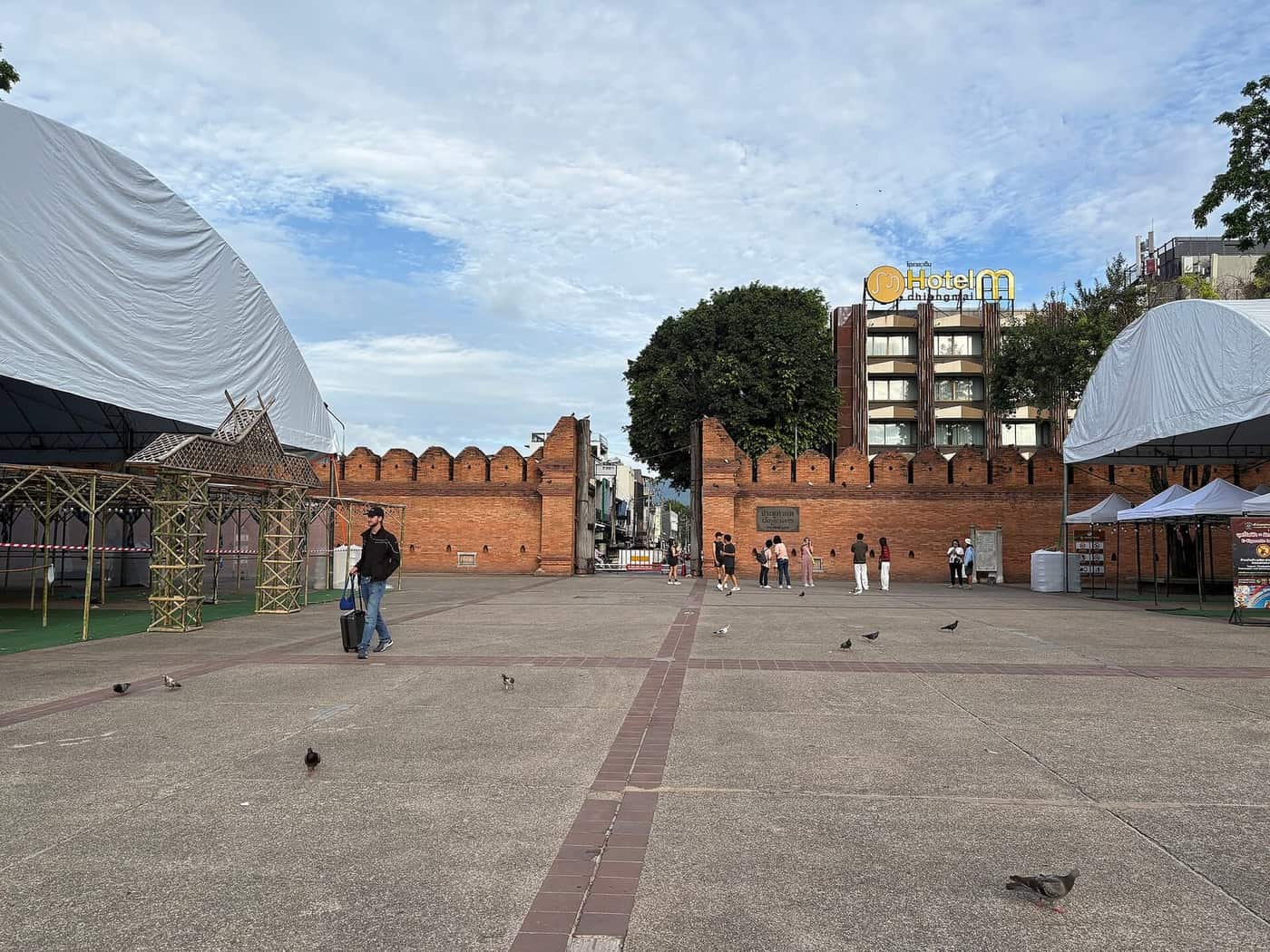
Tha Phae Gate, the main entrance to the Old City. Photo: Chainwit., CC BY 4.0
When is the best time to visit Chiang Mai?
The cool season, November to February, is the best time to visit. Days are warm and dry, nights can drop below 15°C in December and January, and the city hosts Yi Peng, the lantern festival held alongside Loi Krathong on the full moon of the twelfth lunar month, usually in November.
From March to April, farmers burn fields across the north and air quality in Chiang Mai is often among the worst in the world for weeks at a time. If you travel then, check a live air-quality index daily and plan indoor days. Songkran (13 to 15 April) is celebrated here with days of water fights around the moat.
The rainy season, June to October, brings green hills and fewer visitors. Showers are usually short afternoon downpours rather than all-day rain.
Where should you stay in Chiang Mai?
| Area | Best for | Keep in mind |
|---|---|---|
| Old City | First-timers, temples, walking | Busy on Sunday evenings; some rooms are basic |
| Nimman | Cafes, restaurants, modern hotels | 15 to 20 minutes by car to most temples |
| Riverside | Quiet boutique hotels | Fewer places to eat within walking distance |
| Night Bazaar | Shopping, nightlife | Noisy and touristy |
For a first visit, stay inside or just outside the Old City moat. You can walk to the main temples and the Sunday Walking Street, and red songthaews pass constantly.
Things to do in Chiang Mai
Wat Phra That Doi Suthep
The city’s most important temple sits at about 1,000 m on Doi Suthep. Climb the 306-step naga staircase or take the small funicular beside it (20 baht each way). At the top, a gilded chedi said to hold a relic of the Buddha is surrounded by bells and shrines, with views over the whole valley.
Foreign visitors pay 30 baht for the temple. Since October 2025, Doi Suthep-Pui National Park also charges foreign adults 100 baht (children 50 baht). Go early in the morning, before the tour groups, and dress for a temple: shoulders and knees covered.
You can also walk up. The Monk’s Trail starts near the end of Suthep Road and climbs through forest to Wat Pha Lat, a quiet temple beside a waterfall, in about 45 minutes. Continuing to Doi Suthep takes another hour or so and crosses the main road.
Old City temples
Three temples inside the moat are worth an unhurried morning:
- Wat Chedi Luang: the ruined brick chedi, partly collapsed in an earthquake centuries ago, is the most striking sight in the Old City.
- Wat Phra Singh: classic Lanna architecture and the city’s most revered Buddha image.
- Wat Chiang Man: the oldest temple in the city, with a chedi supported by stone elephants.
Many temples host monk chats, informal sessions where novice monks practise English and answer questions about Buddhism. Wat Chedi Luang has one most afternoons.
Night markets
- Sunday Walking Street: Ratchadamnoen Road, from Tha Phae Gate through the Old City, closes to traffic every Sunday evening for crafts and food stalls. It is the best market in the city.
- Saturday Walking Street: Wua Lai Road, south of the Old City, known for silverwork.
- Night Bazaar: open every night on Chang Klan Road, more souvenirs than local life.
Cooking classes
Half-day and full-day Thai cooking classes are one of the most popular things to do in Chiang Mai. Most include a market visit and five or six dishes, often at a farm outside the city. Expect roughly 1,000 to 1,500 baht per person.
Elephants
Choose sanctuaries that do not offer riding, bathing or performances. The ethical options let you observe and feed elephants from the ground. Read recent reviews carefully, since the word “sanctuary” is used loosely.
What to eat
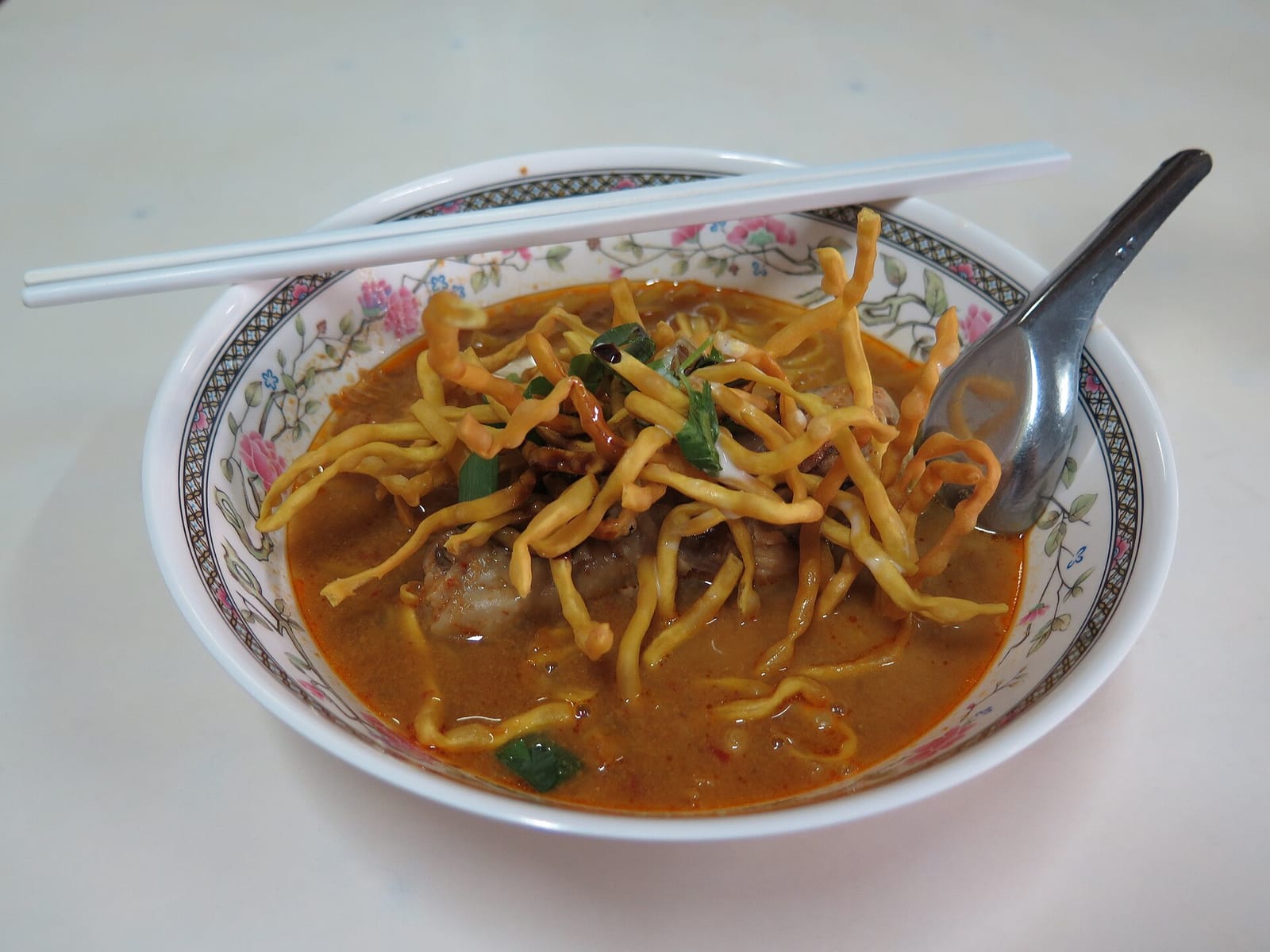
Khao soi, the curry noodle soup of northern Thailand. Photo: Douglas Perkins, CC BY 4.0
Northern Thai food is different from the dishes most visitors know. Look for:
- Khao soi: egg noodles in a coconut curry broth, topped with crispy noodles, served with pickled mustard greens, shallots and lime. The dish Chiang Mai is known for.
- Sai ua: grilled pork sausage with lemongrass, kaffir lime and chilli.
- Nam prik noom: a smoky green chilli dip eaten with pork cracklings and vegetables.
- Khao kha moo: stewed pork leg over rice, sold at markets across the city.
A bowl of khao soi at a local shop costs roughly 60 to 100 baht. For the dishes to look for across the country, see our Thai street food guide.
Getting there
- By air: Chiang Mai International Airport (CNX) is only a few kilometres from the Old City, about 15 minutes by car. Budget airlines fly from both Bangkok airports in about 1 hour 15 minutes.
- By train: the overnight Special Express trains leave from Krung Thep Aphiwat station in Bangkok and take about 12 to 13 hours. First-class berths cost roughly 1,450 to 1,650 baht and second-class berths less. They sell out, so book as soon as tickets open.
- By bus: overnight VIP buses from Bangkok’s Mo Chit terminal take 9 to 10 hours and are the cheapest option.
Getting around
- Red songthaews (shared pickup trucks) run around the city. Short rides cost from about 30 baht per person; agree the price before you get in.
- Grab and Bolt work well and show the fare upfront.
- Scooters rent for roughly 200 to 300 baht a day. You need an international driving permit that covers motorcycles, and a helmet, or you risk fines and an invalid insurance policy.
- The Old City itself is best explored on foot or by bicycle.
Day trips from Chiang Mai
- Doi Inthanon: Thailand’s highest mountain, with waterfalls, twin royal chedis and cool air. A full day by car.
- Chiang Rai: the White Temple (Wat Rong Khun) and Blue Temple, about three hours each way. Long for a day trip, but popular.
- Pai: a mountain town about three hours away on a road with hundreds of bends. Better as an overnight stay than a day trip.
How much does a day in Chiang Mai cost?
| Item | Typical price (baht) |
|---|---|
| Guesthouse double room | 500 to 1,000 |
| Mid-range hotel | 1,200 to 2,500 |
| Street food meal | 50 to 100 |
| Songthaew ride in town | 30 to 60 |
| Doi Suthep temple + park fee | 130 |
| Cooking class | 1,000 to 1,500 |
A budget traveller can get by on around 1,000 to 1,200 baht a day. Comfortable mid-range travel with a private room, restaurant meals and one paid activity is closer to 2,500 to 3,500 baht a day. See our Thailand trip cost breakdown for a full budget, and our Thailand holidays guide for public holidays that push prices up.
At a glance
Wat Phra That Doi Suthep
Hilltop temple above Chiang Mai, reached by a 306-step naga staircase or a short funicular.
- Address
- Chiang Mai, TH
Wat Phra That Doi Suthep
Open in Google Maps ↗Know before you go
Thailand at a glance
Best time to visit
November to February
- Capital
- Bangkok
- Currency
- Thai baht (THB)
- Language
- Thai
- Time zone
- ICT, UTC+7
- Plugs
- Type A / B / C / O, 230 V
- Driving
- On the left
Emergency191 police, 1155 tourist police
Frequently asked questions
How many days do you need in Chiang Mai?
Three full days covers the Old City temples, Doi Suthep, a night market and a cooking class. Add one or two days for a day trip to Chiang Rai, Doi Inthanon or an elephant sanctuary.
Where should I stay in Chiang Mai for the first time?
The Old City. Most temples, the Sunday Walking Street and plenty of guesthouses are inside the moat, and everything is walkable. Nimman suits travellers who want cafes and a more modern feel.
How much does it cost to visit Doi Suthep?
The temple charges foreign visitors 30 baht. Since October 2025 Doi Suthep-Pui National Park also charges foreign adults 100 baht. The funicular beside the stairs costs 20 baht each way.
When is the burning season in Chiang Mai?
Farmers burn fields across northern Thailand from roughly February to April, and air quality in Chiang Mai is often poor in March and April. Check a live air-quality index before booking a spring trip.
Useful links (3)
- Doi Suthep-Pui National Park entrance fees from October 2025, Chiang Mai CityLife— chiangmaicitylife.com
- Special Express No. 9 Bangkok to Chiang Mai, Thai Train Guide— thaitrainguide.com
- Tourism Authority of Thailand— tourismthailand.org


_-_IMG_01.jpg)
